
Condoms are the only type of contraception that can both prevent pregnancy and protect against sexually transmitted infections (STIs).
What are condoms?
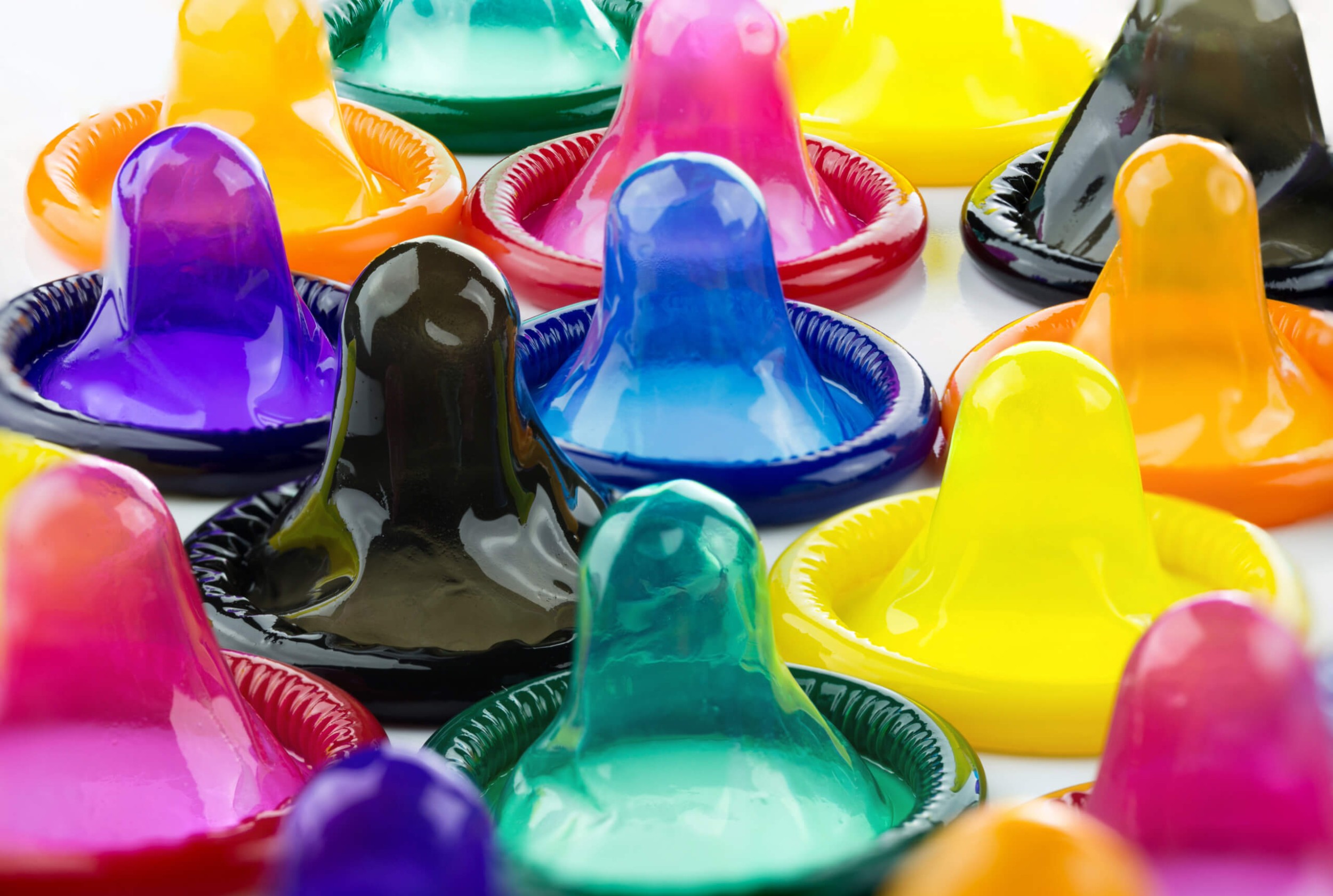
Condoms are made from very thin latex (rubber) and are designed to stop your semen from coming into contact with your sexual partner. Latex-free condoms are also available.
There are 2 types of condoms:
- External condoms, worn on the penis
- Internal condoms, worn inside the vagina
This page is about external condoms. When used correctly, external condoms are 98% effective at preventing pregnancy.
How condoms work
Condoms are a "barrier" method of contraception. They cover a person's penis and stop fluids from being transferred between sexual partners. This prevents pregnancy by stopping semen - containing sperm - from entering the female reproductive system and the sperm from meeting an egg.
Condoms can also protect against STIs if used correctly during vaginal, anal and oral sex. They can also be used on sex toys.

How to use a condom
- Check the condom packet for the European CE quality mark and its expiry date: do not use out of date condoms.
- Take the condom out of the packet, being careful not to tear it with jewellery or fingernails. Do not open the packet with your teeth.
- Place the condom over the tip of the erect penis.
- If there's a teat on the end of the condom, use your thumb and forefinger to squeeze the air out of it.
- Gently roll the condom down to the base of the penis.
- If the condom will not roll down, you may be holding it the wrong way round. If this happens, it may have sperm on it, so throw it away and try again with a new one.
- After sex, take out the penis while it's still erect – hold the condom on at the base of the penis while you do this.
- Remove the condom from the penis, being careful not to spill any semen.
- Throw the condom away in a bin, not down the toilet.
- Make sure your penis does not touch your partner's genital area again.
- If you have sex again, use a new condom.
Finding the right size for you
Each penis is unique, which means finding the right condom which fits correctly is important not only for safer sex but for pleasure and comfortability too.
Condoms are designed to stretch, however wearing the wrong size can cause issues:
-
If the condom feels too big or doesn’t cover the whole penis, it can slip off during sex.
-
If the condom is too long or wide, it can roll up at the base of the penis or be saggy around the mid-section, which can be uncomfortable.
-
If a condom is too tight, it will be uncomfortable for the person wearing it and can easily split during sex.
Condoms come in various sizes: extra small, small, medium, large, and extra-large. Sizes can also differ from brand to brand, so it is important to check the packaging to work out which size best suits you based on your measurements.
How to measure your penis to find the best size condom
-
Before you measure yourself, find a measuring tape or ruler, and make sure your penis is erect (hard) and stand upright.
-
Place a ruler/measuring tape at the base of your penis, ensuring you measure from base to the very tip of your penis. This will tell you the length of your penis (in mm).
-
Wrap a measuring tape (or piece of string which you can then line up against a ruler) around your penis to find out it’s circumference (in mm).
-
Use these measurements to decide which size is for you according to the condom box packaging or the size charts online.
The pros and cons of condoms
| Pros | Cons |
|
When used correctly, they the only method which both prevents pregnancy and protects both partners from STIs |
Some couples find talking about using condoms awkward |
| You only need to use them when you have sex | Condoms may split or tear if not used properly. If this happens to you, you may need emergency contraception |
| No serious side effects | Some people may be allergic to latex: but you can get latex-free condoms |
| They are easy to get hold of and come in a variety of shapes, sizes and flavours | Single use |
| Can be used alongside other contraceptive methods | |
| Can be used for all forms of sex: vaginal, oral, anal and sex toys |

Where to get condoms
You can get condoms for free, even if you're under 16, from:
If you're aged 14 - 24, you can get free condoms via Bexley's C-Card Scheme.
You can also buy condoms from:
- pharmacies
- supermarkets
- websites
- vending machines in some public toilets
- some petrol stations
Always buy condoms that carry the European CE mark or the UKCA mark on the packet. This means they've been tested to the required safety standards.
How to talk about condoms with a partner
It can be daunting to talk to a partner about condoms, but there is no shame in bringing it up. There isn’t a ‘perfect’ time to discuss condom use with a partner, but the earlier the better, preferably before you have any sexual contact with them. Some ways of starting the conversation;
-
Talk about is generally and casually. Asking questions can be an easy way to start the conversation: ‘Do you use condoms when you have sex? Have you used condoms before when having sex?’
-
Say it directly: ‘If we are going to have sex, I would like to use a condom.’
-
Work it into a conversation: ‘My friend told me once that her partner wouldn’t use a condom, what do you think about that?’
-
Ask about their preferences: ‘Is there a particular type or brand of condom you prefer using?’
Starting the conversation may feel awkward at first, but the more you talk about it, the more natural it will become.
What affects their effectiveness?
Do...
- Check the expiry date. Don’t use out of date condoms as they could split
- Check for the European CE mark or the UKCA mark on the packet to make sure that it's safe to use.
- Use a new condom every time you have sex – they are single-use only. This includes if you are moving from anal sex to vaginal sex, which can cause infections
- Be careful not to rip them with sharp nails or jewellery
- Use water-based lube to make them easier and more comfortable to use
Don't...
- Don’t use condoms if the wrappers look damaged
- Don’t use two condoms together: this isn't necessary and increases the risk of splits or tears
- Don’t use oil-based lube or creams with latex condoms as it can make them less effective
- Don’t use the condom if you’ve already tried putting it on the wrong way. This is because it may have touched some pre-cum, or semen which could mean there is a risk of pregnancy and STIs. Use a new condom instead.
Commonly asked questions:
‘Should I use two condoms for more protection?’
No - it is not recommended to use two condoms at the same time as it is more likely that one or both split or break due to friction. This is the same for using an internal and external condom at the same time, it’s best to just use one or the other. If you’re worried about pregnancy, you can use condoms as well as other types of contraception that are not barrier methods.
‘How long do condoms last?’
Condoms have an expiry date so make sure you check this before you use one. You also should also replace any condoms that have been in your wallet, bag, or on your person for over a month. If condoms have been exposed to high temperatures, 40°C or higher, it is best to replace them as heat can degrade condoms and make them less affective.
‘Why do condoms have texture?’
You can buy condoms in different thicknesses and textures ranging from extra thin to extra thin, ribbed and dotted. Some people prefer thinner condoms as they are less noticeable and maximise pleasure for both parties. Some people prefer ribbed or dotted condoms for the same reason.